Minerva Reads, the blog of the Minerva reading group based in Canberra, Australia, has moved to a WordPress platform. It can now be found at this address: MinervaReadsACT. Old posts from this blog have been migrated to the new blog.
Wednesday, 13 September 2023
Minerva Reads blog has moved to a new site

Wednesday, 26 January 2022
Amy Witting, Isobel on the way to the corner shop
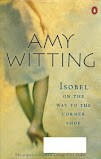
Our first book of the year was an almost-classic Australian novel, Amy Witting's Isobel on her way to the corner shop. The second in what was expected to be a trilogy about Isobel, this novel won The Age Book of the Year in 2000, and was shortlisted for that year's Miles Franklin Literary Award and Nita B. Kibble Literary Award.
Born Joan Austral Fraser, Amy Witting is a pseudonym devised from a promise she made to herself to "never give up on consciousness', not be unwitting, but to always remain 'witting'".
The novel is set in Sydney and the Blue Mountains in the early 1950s.
As always, we started with our ...
First impressions
- Found it such a joy to read, to be in the life of this resilient, witty but still developing young woman. Loved the insights into humanity provided through setting it in the confined world of a sanatorium which contains a wide gamut of humanity - patients of a disease that doesn’t discriminate between rich and poor, and a variety of doctors, nurses and visitors.
- Found it tedious to start with, but as more characters were introduced, particularly with Dr Wang and the poetry discussions, started to like it, and by the end was enjoying it.
- Enjoyed it from beginning, including when she should she was mad, and enjoyed the "scattergun of insightful things" said throughout.
- Really enjoyed the novel, finding nearly all the characters captivating, and impressed by Witting's powers of observation.
- Found it light, fun, after just reading Middlemarch, but on the fence overall.
- Took a little while to get into it, particularly the "dithering around at beginning", but enjoyed the good range of characters.
- Read it a few weeks ago and it left no impression. Had forgotten most of it. It wasn't long, and a bit ho-hum.
- Enjoyed it, and was drawn in quite quickly. Found it full of insights, and thinks there's "lots there". Reread the introduction by Maria Takolander, and felt that elevated the book.
- Took a little while to get into it, but then found it immersive, and enjoyed keeping up with Isobel. It's an observational book, providing an insightful look into a young woman finding her value. (Thought the first book, I for Isobel, was a knock out. It's more shocking, and poignant, and makes clear why she had no self worth.)
Isobel
We talked a bit about Isobel, and how she was "saved by the disease". She herself is relieved to find that her problem isn't "madness" as she'd been fearing. We enjoyed her early description of herself, when she first becomes sick, as being:
a parcel. She didn't mind being a parcel. It was easy.
It was clear from this that Isobel was very sick, because in the first few pages she had established herself as capable of being rebellious and not, as one of the group said, "a people-pleaser".
This is probably partly due to the fact that Isobel, growing up, was not used to people liking her. (We know this from I for Isobel, but also from the early pages of the novel and her own thoughts about herself.) Early in the novel she rebuffs affection from a young man, realising too late that he'd been sincere. An emerging writer (though they didn't use that term when the novel is set), she tries to set this right through a poem.
But, as the novel progresses, she comes to realise that people do like and care for her and that she's fortunate. However, it does require her to change her way of thinking:
I have to live as if...I have to assume that I have some importance to other people. I have to live accordingly. I have to step out into space.
Isobel is a wonderful character - warm, resourceful, accomplished (she can knit well too!), flawed, and willing to learn.
Other characters
The novel has a wide range of often colourful, but certainly "real" and well-drawn characters. We discussed several of them too, but particularly Val, Isobel's peevish room-mate for a significant part of her time in Mornington (the sanatorium). She's well-drawn as a self-centred inflexible woman who has few resources of her own. She makes life difficult for Isobel, but through her (as well as through others), Isobel learns and develops. Isobel comes to realise that Val is probably illiterate, but she is honest enough to recognise her "own illiteracy" - emotional illiteracy - and that she'll have to work to overcome it.
But, there's a whole cast of lively characters, from the woebegone lovelorn but immature patient Lance to the poetry-loving Dr Wang, from patient Boris who looks out to help others to the patient who's also a cultured pianist, Elsa Soames.
Sister Connor is, superficially, the stereotypical, senior nurse, enforcing the doctors' rules, wanting a tidy ward that the boss doctors won't criticise, but when it's appropriate she shows care, flexibility and wisdom.
And then there's the doctor-in-charge, Dr Stannard, who seems to have made Isobel a favourite. What does that all mean and how should Isobel react when he makes an interesting offer at the end?
Themes
We didn't talk a lot about themes, but we briefly touched on three: learning to be one's authentic self while not being unkind to others, understanding what love means, and making one's way as an artist (writer, in Isobel's case.)
The setting
Most of us enjoyed the setting, both in terms of the history of medicine, hospitals and tuberculosis sanitoriums, and regarding similarities and differences with hospitals today. Our nurse member who loves hospitals, and others of us who had experienced hospitals, found much that was true still today. We talked a little about the problem of institutionalisation and also about Isobel's awareness of the unspoken rules and etiquette involved, the dos and don'ts.
Some of the older members of the group had memories of people with, even dying from, tuberculosis, and also of the tuberculosis x-ray vans that would travel around schools.
One member said Witting, who had had TB herself, was quite delicate about the more gruesome aspects of TB, like the coughing, and didn't mention the ever-present sputum bowl till near the end.
Writing
We talked a little about the writing. It's not a long book but most of us felt there was a lot going on. We admired the way Witting "nails things" in just a few words.
We also talked abut her career. One member had done some research into her career said that everything she wrote people wanted to publish. Witting was a teacher in Sydney with Thea Astley, who, admiring a particular short story suggested she submit it for publication. This story was published in The New Yorker in April 1965! Not bad eh? Patrick White also admired her writing.
Other books mentioned
Two books were mentioned as relevant to this read: Amy Witting's I for Isobel, and Margaret Barbalet's Blood in the rain which is set in the beginning of the 20th century and tells the story of two young people whose start in life is difficult like Isobel's. Others were mentioned but our failing memories couldn't remember the titles!
Present: 9 members
Wednesday, 15 December 2021
Minerva's Top Picks for 2021
As for all groups, 2021 was another challenging year for Minervans, but on the back of 2020 we knew what to do, so it was Zoom for our August and September meetings, and then in October, when rules relaxed but n to enough to have a house-full of people, we tried a late afternoon picnic. The Spring weather gods were kind and we had an excellent and enjoyable meeting.
But now, onto the real business of this post ... For the fifth year now, we Minervans voted for our Top Picks of the year. As before, each member was asked to nominate her three top picks from the books we read as a group this year ... and here is the outcome ...
All twelve currently active members took part, and all nominated the maximum three books, resulting in 36 "votes". Just to reiterate what we've said before: this is not a "proper" survey. Votes were all given equal weight, as was advised in the email request, even if some members ranked their choices. Also, not everyone read every book, meaning different people voted from different "pools". So, the results are indicative rather than authoritative, but it's fun and it does convey some sense of what we all liked.Last year we had a runaway winner with Melissa Lucashenko's Too much lip garnering 10 of the 36 votes, and the tied runners-up receiving 5 votes each. This year was completely different, with the vote being very close. The was just one vote between each book and the pacesetter behind it. It was a year in which it was very hard to make a choice.
- Shuggie Bain, by Douglas Stuart (our review) (8 votes)
- Song of the crocodile, by Nardi Simpson (our review) (7 votes)
- Girl, woman, other, by Bernadine Evaristo (our review) (6 votes)
With highly commendeds going to Where the crawdads sing, by Delia Owens (our review) (5 votes) and Hamnet, by Maggie O'Farrell (our review) (4 votes).
Another difference from last year is that no nonfiction books appeared in out top picks. Indeed, although they generated excellent discussions eight of them earned a vote at all. The remaining books all received at least one vote.
Continuing our Zeitgeist Award for the member who voted for the top three books, there were two winners this year: Anne and Helen.
Some comments on our top picks
Note that not everyone commented on their choices ...

SHUGGIE BAIN:
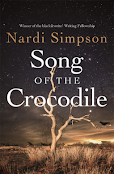
SONG OF THE CROCODILE:

GIRL, WOMAN, OTHER:
SHUGGIE BAIN:
- "I loved Shuggie Bain, for its perceptive story of a young boy struggling with poverty and a disfunctional family, and Agnes trapped by her dreams and addiction." (Kate)
- "really powerful story (ie very well written) that will stay with me for a long time." (Sylvia)
- "Wouldn't have read it without the Minervans keeping me company, but brilliant evocative writing." (Helen)
SONG OF THE CROCODILE:
- "punchy, truth-telling story about First Nations' lives in rural Australia." (Sue T)
- "fantastic women characters who faced horrendous challenges with guts -- I loved the 'fantastic aspects' of it too (eg the crocodile totem's presence)" (Sylvia)
- "Edgy and important" (Paula)
- "a saga of a story close to Country. Full of beauty and I think I understand intergenerational trauma more as a result of reading this book." (Helen)
GIRL, WOMAN, OTHER:
- "I loved Girl Woman Other for its fabulous evocation of women in complicated relationships, exploration of gender and colour." (Kate)
- "satirical, insightful exploration of the lives of diverse women in contemporary England." (Sue T)
- "because it made me feel like I was almost there in London. A great book to read while the borders stopped travel." (Helen)
WHERE THE CRAWDADS SING:
- "Evocative and compelling" (Paula)
HAMNET:
- "Engaging, well plotted and historically plausible depiction of little known historical characters while famous character is kept in the background." (Sue B)
- "I loved entering this world of 16th century life in Stratford for the powerful story of an invisible woman, and the impact of grief." (Kate)
- "Powerful imagined history. Beautiful descriptive writing." (Paula)
Other comments included Sue B describing Anthony Trollope's Barchester Towers as a "clever, witty old favourite", and Sylvia calling it "a different world in which to escape". Kate described Steven Conte's Tolstoy Estate as "such a powerful story about war and love and loyalty and futility", and Sue T was impressed by Tsitsi Dangarembga's This mournable body, calling it a "remarkable novel about how the interplay of race, gender and colonialism continues to impede the country’s growth."
Other recommendations
Again, several (including our coast-observer Marie) took up the option to share some other favourite books from their reading year. Here are their suggestions (alphabetically by author), for those looking for other reading ideas. Dare I say that, among last year's recommendations, was mine for Too much lip, so, you know, take these recommendations seriously!- Irma Gold, The breaking (Sue)
- Eddie Jaku, The happiest man on earth (Celeste)
- Helen Meany, Every day is Gertie Day (Sue)
- Rohinton Mistry, Family matters (such a beautiful writer) (Kate)
- Kate Moore, The woman they could not silence (Kate)
- Heather Morris, The tattooist of Auschwitz (Celeste)
- Jonica Newby, Beyond climate grief (very emotional memoir of her time on the south coast during the 2019/2020 bushfires) (Sylvia)
- Archie Roach, Tell me why (Kate)
- Trevor Shearston, Hare's fur (Sue)
And, then, there were picks from ex-Reading Group members in Sydney and the South Coast:
Marie
- Bernadine Evaristo, Girl, woman, other
- Sarah Winman, Still life
- Ingrid Persaud, Love after love
Susan (From the Moruya Heads sub-branch!)
- Brit Bennet, The vanishing half
- Douglas Stuart, Shuggie Bain
- Pip Williams, The dictionary of lost words
Jenny
I very much enjoyed:
- Ariel Lawton, Code Name Helene ... for fast action and pure enjoyment
- Anne Tyler, The redhead by the side of the road ... for a lengthy and interesting discussion, and a reflection on self
- Sarah Winman, When God was a rabbit ... still going with this, however so far it is dealing with serious childhood issues with whimsy and humour, and is quite beguiling.
Janet
- Ayad Akhtar, Homeland elegies ... exploration of what it is to be a Muslim in New York in a mix of memoir, novel and essay. Plus fascinating father/son relationship)
- Colm Toibin, The magician ... dramatised portrait of Thomas Mann
- Christian Kiefer, The animals ... ‘Kiefer’s second novel contrasts wildness and civilization through the story of a man who runs an animal refuge to escape from his criminal past.’
Gill
My three are hopeful books for difficult times:
- Sarah Winman, Still life ... I’ve read it twice already!
- Pip Williams, The dictionary of lost words
- Rutger Bregman, Humankind
Any comments? (And it's not too late to add to this list if you become inspired after seeing it!)
Sunday, 5 December 2021
The Believer by Sarah Krasnostein
Encounters with love, death and faith.
Our final book of the year, for our November meeting, was Sarah Krasnostein's The believer. The meeting was well attended, and included one of our former members, which was a lovely surprise.

There are 6 stories of believers interwoven into 53 chapters so the reader is constantly having to recognise and ‘accept’ the character and the circumstance of the person or people being written about. There were many ‘light bulb’ moments too where the author showed her brilliant intelligence and respect and compassion for these people and gave us insights. Most of us enjoyed it more than we expected.
‘In each case (ie the 6 stories), I needed to understand them, these people I found unfathomable, holding fast to faith in ideas that went against the grain of more accepted realities’. (page 2)
First impressions
- I admire her writing but I found the characters challenging as I do not understand how they can believe some of the ideas expressed.
- It is well written, lots of anecdotes rather than science and the question of ‘why’, which intrigues me more. I enjoyed the autobiographical moments.
- I was not sure whether it was short stories or a monograph but thought the structure was better that way, otherwise it would have dragged if each story was sequential.
- Krasnostein is a wonderful story teller about slightly painful people such as Freddy and Rhonda. Annie, the Death Doula, is a beautiful portrayal of a woman where Krasnostein is engaging with the characters.
- The whole topic is an emotional one and we admire Krasnostein for those portrayals. There are particular characters, mainly women, who stand out, such as Lynn, who was incarcerated for many years after killing her abusive husband. Her sentence was extended unnecessarily and unfairly. The Mennonites are another interesting thread. The creation scientist, Georgia Purdom was interesting in the audio book version, as she was deaf and the reader sounded as if she was deaf reading her narrative.
- As a former Life Line councillor I found it intensely interesting as Krasnostein has incredible insights into the philosophy and psychology of these people. I would have preferred more analysis at the conclusion (which was a preference from many of us).
- Her observations of the human condition were excellent and her fairness and respect for some of these odd characters is admirable.
- I found it hard going as there was no structure. I expected a thesis with examples to illustrate with an essay at the end but it wasn’t there. I liked some of the characters such as Annie and Lynn but not the creationists. One can only be amazed by people who think the Ark had little dinosaurs on it who could be vegetarian for the duration.
- I found the book annoying but engaging. I was struck by the tragedy of Lynn, her life sentence in gaol and her resilience. Also drawn to the characters of the lost pilot, Fred, and Annie, the Death Doula. I was struck by the dissonance with the Brian Cox show which is presently being shown on ABC TV where he discounts any form of life on other planets.
- I like to read to ‘get into’ other worlds and I found the 6 worlds completely different from mine. It was a bit patchy but I enjoyed it. The 6 subjects could be divided into 2 personal, 2 religious and 2 ‘other world’ stories. I also liked her exploration of how some people crave certainty and control, and how these ‘needs’ lead people to believe in conspiracy stories. This helped explain, for me, how some people have become susceptible to anti-vaccination propaganda etc during the pandemic. I love books which end up with questions.
- I was interested in the stories but I didn’t engage with it. I have just read the book: The tattooist of Auschwitz by Heather Morris which is an excellent read.
- Having recently suffered a bereavement I found this book was talking to me with some of the characters, especially Katrina who is dying from cancer. I was particularly drawn to the sad story of Krasnostein’s grandmother living as a Jewish child and barely surviving the second world war. Her difficult childhood had an effect upon her daughter (Sarah’s mother) and those difficulties influenced Sarah. Sarah realises, as she's writing this book, that she
‘… had been born into a line of missing mothers’. (page 74).
Discussion
There were certain characters who were amazing as we have said in our first impressions, such as Annie and Lynn. They were leading complex lives but showed resilience and strength of character in the rough and tumble. They were empowering themselves and others by their strengths and being ‘rocks’.
Sarah Krasnostein’s own searching for ‘belief’ comes through. ‘If I could only ask the right questions I could understand’. You need answers but the questions are more interesting.
She gives beautiful personal insights, ‘finding a psychologist worked for me’. So in some ways this book is a personal journey. As the author is a Jewish woman the Christians/Mennonites did not try to convert her we felt.
The choir was interesting as they were united by emotions.
The people are so variant in the ways they see the world. I can see my own childhood in Loisann’s childhood, said one member. So there is common humanity that unites us and which is empowering.
We admired the way the author is so respectful of the people she interviewed such as: Freddy’s fiancée even though the sentiments expressed by Rhonda ‘got to her’ at times; we laughed about the Buddhist monk living as a lodger in Annie’s garden; and we were amazed at the dignity of Lynn, the ex-prisoner who had suffered so much and was still so selfless. The injustices perpetrated on Lynn were concealed under disorder according to one of our members, especially see ch. 42. In 1970s America when Lynn was convicted of killing her husband, self-defence was not a permissible legal claim by a woman but it was allowed for men convicted of a murder. This was a lightbulb moment for some members.
We discussed the fear Mennonites expressed of education, especially higher education. It poses a threat to their understanding of the world, and particularly of the Bible. See especially chapter 40.
‘Anthony’s conflict comes from the fact that the certainties he received instead of education are poor tools for daily living …’ (page 258).
And
‘Theology always scares me because it takes the things that seem simple and makes them complex.’ (page 259)
Ms Krasnostein also comments on the Mennonite’s naivety such as exhibited by the Krieder family. They had no idea that families could be homeless in New York so easily. It is as if they are living on a separate planet. They have no concept of the people’s lives living nearby and no understanding of the structural inequities faced by these folk. See particularly pages 313-314.
We talked at some length about the structure of this book. The criss-cross of the stories made it harder to get into but we also wondered whether it would have been boring or at least not as interesting if each story was written straight through. One reader found the spook parts less integrating than the ‘ufologists’.
We all admired her writing style, with one member describing it as quite poetic in places.
The stories are based on fact as shown by the story of Fred, the young pilot who went missing. Internet searches will produce the details just as Krasnostein relates them.
We decided that the apparent alien spacecraft was probably just an illusion created by the light or some other banal explanation.
Human beings seek meaning in life and sometimes we look for patterns, which is why the US government has just announced a new UFO office to be set up to examine various sightings of unexplained objects in the sky.
We decided that if Sarah Krasnostein had analysed the characters according to psychology, it would have been a very different type of book from the one we read. In this work the reader takes a journey and respects the characters no matter what we think of their ideas and life styles.
One member mentioned Roger Ailes who worked for Fox news and was influential in their portrayal of ‘facts’ for many years. Some of the people in this book want certainty, which suggests they would be influenced by news channels such as Fox which portray the world in simplistic black and white terms.
We also talked a little about seances and how people can be convinced of things which are not true – eg moving of the board or trying to find answers. People want certainty.
Belief is fascinating – such as a belief in ufos and aliens.
We found Krasnostein’s account of her grandmother’s and mother’s relationship and her own connection to these women so affected by being Jewish and living through the second world war revealing. The author herself is searching for answers just like her interviewees (pp. 71-73).
In talking about the Creation Museum we liked the quoting of Hannah Arendt – knowledge for thought, converting fact into meaning, but truth isn’t meaning.
‘To sit in the lecture is to experience a great untethering from what Hannah Arendt called the “human world”. …shared world of stable processes, laws and institutions which create the conditions for social negotiations and the pursuit of common goals…’ (pp. 43- 45)
An unusual book but quite pertinent to our present times.
Book recommendations
Just one book came up this month: The believing brain by Dr Michael Shermer. The recommender felt it was an excellent book which explains how beliefs are born. It sounds very pertinent to our times.
Present: 10 plus our special guest.
Saturday, 6 November 2021
Schedule Ideas for 2022
Given our November meeting - and selecting our schedule for the first half of the year - is around the corner, here is a list of some recommendations for our schedule, in addition to those in the sidebar (which, currently, is misbehaving in terms of my ability to easily edit!)
Includes recommendations from Deb, Anne, Helen, Denise, Celeste, Marie, Sue ...
Some older Aussies available from Text Publishing
- Martin Boyd's A cardboard crown: the first in his trilogy based on him and his family, a genuine classic for us!
- Madeleine St John's The essence of the thing (from the author of The women in black, this is the first Aussie author's novel to be shortlisted for the Booker Prize, I believe. 1997)
- Cory Taylor's Me and Mr Booker: won the now-defunct Commonwealth Book Prize in 2012.
- Amy Witting's Isobel on the way to the corner shop: or any of hers; we did her A change in the lighting many eons ago. Won The Age Book of the Year in 2000.
Non-Aussie classics
- Wilkie Collins' The women in white (1859): the first crime/mystery novel (but nearly 700p.)
- Chaim Potok's The chosen: American classic, 1967, abut respecting difference.
- Elizabeth von Arnim's Vera: the Australian-born but really British author of The enchanted April. Barbara Pym said her books are "a revelation in their wit and... dry, unsentimental treatment of the relationship between men and women"; the director of The enchanted April film said "Von Arnim didn't have much patience with the male ego, and she didn't have much more for the women who bowed beneath it".
Recent(ish) fiction
- Larissa Behrendt, After story: First Nations writer, a mother-daughter story involving a literary tour of England, but also a past tragedy
- Damon Galgut's The promise: 2021 Booker Prize winner, supported by a few in the group on WhatsApp. (304pp.)
- Irma Gold's The breaking: local author, who has attended a meeting before with her Canberra anthology, The invisible thread.
- Hannah Kent's Devotion: new book by author of Burial rites.
- Kazuo Ishiguro's Klara and the sun: about AI
- Ingrid Persaud's Love after love: set in Trinidad; NY Times says "Great books about love, like this one, feel like precious and impossible gifts. We should cherish the writers who provide them."
- Francis Spufford's Light perpetual: longlisted for the 2021 Booker Prize, WW2 story.
- Amor Towles' The Lincoln Highway: NY Times bestseller, and author of A gentleman in Moscow. (nearly 600 pp.)
- Ida Vitale's Byobu: translated novella from a Uruguayan poet, first published in 2004 and her first translated into English.
- Sarah Winman's Still life: Set btn Florence and London's East End from WW11 thru to the 80s, about friendship making family, and lots of "yummy Italianness". (over 450pp.)
Some nonfiction
- Candida Baker's Heart of a horse: life lessons from horses and other animals: new Australian nonfiction by journalist Baker who moved to Byron Bay (320pp.)
- Raynor Winn's The salt path: memoir about a couple, the husband terminally ill, walking the South West Coast Path, from Somerset to Dorset, via Devon and Cornwall (over 600 miles) (288pp.)
Wednesday, 27 October 2021
Sofie Laguna, Infinite splendours
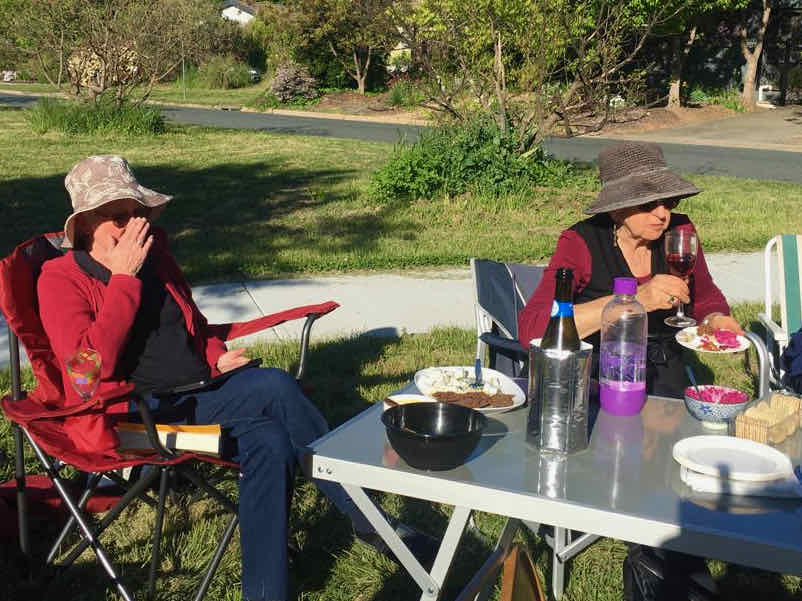
With pandemic post-lockdown restrictions still in place, but not wanting yet another Zoom meeting, Minervans "pivoted" (to use the word of the day) to a late afternoon meeting in the park opposite our October host's home. We enjoyed our savoury nibbles, wine and cake in the late afternoon sun, while still keeping to our tried-and-true bookgroup formula - chat for half an hour or so, book discussion for around an hour, followed by cake and chat for another half hour or so.
 Our book was Sofie Laguna's Infinite splendours, which tells the story of Lawrence who was, as a sensitive, imaginative ten-year-old, groomed and raped by his visiting uncle. What happens to Lawrence after this, how he traverses life as a damaged person, occupies the major part of the book. It's a tough, heart-in-throat book about, as Laguna says, the price paid when certain boundaries are crossed.
Several of our first impressions aligned, with the following reactions recurring most often:
A member referred us to other works on child abuse, Polish-Swiss psychologist Alice Miller's Thou shalt not be aware, and Andrew Bovell's play, When the rain stops falling.


We started of course, with our ...
First impressions
- a bit repetitive, so longer than necessary
- a tough, painful, disturbing read, "a bit of an ordeal", particularly given we've already done novels about intergenerational First Nations trauma, and poverty and alcoholism, this year
- powerfully, beautifully, superbly written, including the writing about the mountain, nature and the landscape
Other impressions included:
- had faith that Laguna would leave us with hope, but this time it felt a bit thin
- liked that it put a human face on a child molester, showing that underneath there is often a suffering person who is damaged, but overall found it too much of a social messaging novel, and felt lectured at
- thought the art was boring and predictable
- thought the best parts were the children interacting at the beginning
- didn't believe the character or resolution
- was drawn in by the lovely depiction of childhood, really liked the use of the mountain to evoke Lawrence, and found it so sad, but was entranced
- found the characters, even minor ones, very well described
- found the fear, foreboding visceral at times
Further discussion
Naturally we focused a lot on what happened to Lawrence, how and why it happened, and how nothing was done for him after the event. We discussed the suggestion in the novel that his mother and uncle (Reggie) had been molested, and that Reggie told Lawrence not to tell his mother because it would destroy her. We also noted that Lawrence's mother had likened Lawrence to Reggie, describing them both as clever. One member wondered whether the mother had been molested by her brother (Reggie) when young, but the rest of us didn't see this. We noted that Paul had been less interested in Uncle from the start. After the event, he suspected something had happened, asking Lawrence "what did he do to you?", but the traumatised Lawrence refused to answer. This was heartbreaking, given he had done all he could to protect Paul from being abused similarly. All these and more affected why the situation played out the way it did.
We considered that one of the reasons Laguna set this novel in the past was that it was a time when there was less awareness of abuse and of its potential longterm impact. It enabled her to more authentically tell a story about someone who went under the radar.
We discussed the writing of the main abuse scene, and how it was described from a 10-year-old's perspective. We agreed that Laguna conveyed well what happened without using language that Lawrence wouldn't know.
We talked a lot about Lawrence, and his apparent naïvety as an adult. In many ways his development stopped when he was 10-years-old, which is not surprising. He changed from the sensitive, imaginative, curious little boy he had been to someone withdrawn, and prickly. He fluctuated between love and hate for his mother and Paul.
We noted that Laguna quickly spans the years from 10 to 25, when the mother dies, and doesn't detail Lawrence's reaching puberty. Laguna uses various ideas to convey the effect of the trauma on Lawrence, one being his bowel-movement difficulty with visits to the outhouse being excruciating for him, and another being descriptions of his "two selves", which started at the time of the abuse:
We noted that Laguna quickly spans the years from 10 to 25, when the mother dies, and doesn't detail Lawrence's reaching puberty. Laguna uses various ideas to convey the effect of the trauma on Lawrence, one being his bowel-movement difficulty with visits to the outhouse being excruciating for him, and another being descriptions of his "two selves", which started at the time of the abuse:
I felt myself dividing; there were two selves to choose from. One inside, one outside. (p. 152/3)
Much later, when the final crisis comes, Lawrence reflects
One member suggested that, in some ways, 10-year-olds are the peak of human achievement. Expanding this, another member added that Lawrence reads in his art book that Constable had said he had seen all he needed to see for his paintings by the time he was 10 years old.It was another moment on the way to the next, and I was both in it and outside of it. Yet was it not the same for all moments? One part engaged, another observing. Two selves. (p. 411)
We discussed the ending a little, but got a bit waylaid by one member saying she didn't believe it at all. This resulted in a good discussion about art and artistic talent, and about Lawrence's skills and what style we thought he painted in, but we didn't discuss other aspects of the ending.
We also briefly discussed the large number of motifs in the novel: the bunker, Wallis (a mountain in the Grampians), the outhouse, the scarecrow, Robinson Crusoe, colours, Madame Butterfly, to name some. Were there too many? We all liked the role of Wallis, as something unchangeable/stable but also magnificent in Lawrence's life. We also felt that the bunker worked well as a place of safety for Lawrence, even if sometimes that safety meant hiding from himself rather than resolving his inner demons.
We talked about the title, which came from the artist Millet who said that "I see far more in the countryside than charm, I see infinite splendours." Lawrence spent his life trying to capture those splendours, and at the end his art, in a sense, achieves "eternity" (or "infinity") for him.
We talked also little about Paul. Some felt he'd been an excellent brother, while others felt he had been too cursory in his care. We liked Mrs Barry, who had recognised that Lawrence behaved like the men who had come home from the war (ie. traumatised) but, of course, she didn't know why.
Some members were concerned about some anachronisms (caused probably by editors being too young!):
- Ten-year-old Lawrence would not say "f**k off" to his brother in 1953
- The scarecrow's face was coloured with a marker which members felt didn't exist then (According to Wikipedia they were around, but would they have been prevalent in rural Victoria at the time?)
- Reggie makes coffee which was not likely in a 1950s country home
No matter how much we liked or struggled with the book, we ended up having our usual highly engaged, wide-ranging and insightful discussion - but, we also agreed that we'd like to fit in a few lighter (though still meaty!) books next year!
And, some pics ... with thanks to the (absent) photographer



Present: 11 people
Friday, 1 October 2021
Hamnet by Maggie O'Farrell

Another zoom meeting during lockdown this month. We are getting more familiar with the technology but all of us still prefer to meet in person.
Hamnet is the story of the wife and children of an unnamed playwright of the sixteenth century living in the small village of Stratford, Warwickshire, England. It concerns Agnes (pronounced in the French way Ar-nes) and her children, Hamnet and Judith who are young twins and their older sister Susanna. We hear about Agnes’ early life and her courtship with the future playwright and the daily life of the village people. The crux of the novel is the very sad death of Hamnet from the pestilence at the age of 11 and the reactions by his mother and sisters.
Maggie O’Farrell is a prize winning UK author who has written 8 novels and the autobiography : I am, I am, I am.
All members enjoyed this novel and some even loved it and we were all very pleased to have read it.
First impressions:
- It inspired me to look into Shakespeare’s early life by reading a book by John Bell (of Bell Shakespeare company fame) called On Shakespeare. I have visited Stratford and Ann Hathaway’s cottage, a short walk out of Stratford and it was enjoyable to remember the scenery in reading this novel.
- I particularly appreciated the evocation of grief which was written so movingly. I have a few questions about this book though, so not totally won over by it.
- I really wanted to read it.
- I found it very moving, evocation of time showed that the author had researched the life of the villagers well. It was very dense at times and hard to penetrate the intensity but O’Farrell nailed it so well. The courtship scenes with Agnes and the playwright were good and the book was worthwhile.
- Reading about the sixteenth century plague during our pandemic was amazingly pertinent and the book was an incredible feat of the imagination and research.
- The grief struck me. I thought Agnes was a great character.
- It was a relief to read after having read Shuggie Bain, last month’s novel. I admired the way the author expressed the tenderness and the emotions of the characters. I wondered about the language at times as it seemed too much. I skipped over some passages. I loved the structure going backwards and forwards in the story.
- Immersive novel, a little dense but with evocative and beautiful language. It was about love and motherhood and grief. I wondered why not write about Shakespeare’s wife? The novelist nailed it.
- The portrayal of grief over the death of Hamnet was the ‘worst thing’. I felt that when the child died there was a loss of momentum in the second part.
- How did it get tied into the play of Hamlet? I am not clear on that aspect.
- I was won over on the second page with the sentence “ the smell of his grandparents’ house is always the same : …’ I can remember experiencing a similar sensation as a child. I loved all the details of the way people lived, it was fabulous detail. Including talking about the menstrual rags that had to be counted by the older women.
- I liked the structure of the child dying and the romance being interwoven through different time frames.
- I was lost on the mystical ‘stuff’. Hamlet is nothing like Hamnet. (It was pointed out that Shakespeare in the novel trained the actor to have similar mannerisms to his son.) The book is not about Hamlet or Hamnet. It is about motherhood and Agnes.
- I found it very readable and felt I got into the 16th century household. It was a poignant story and it starts off with a lot about emotion. Reminded me of The year of wonders by Geraldine Brooks. I found the story of the flea amazing, coming from Venice or in other stories from the Black sea.
Discussion
Does the structure work ?
One member liked the weaving in and out of the stories and it seemed to her like two curves meeting at the end. The novelist pulls it off. It is not over-complicated and we enjoyed the dual storyline.
Why did O’Farrell write the book about this death?
Would it have had the same impact if it had just been chronological? We decided that the impact and tension would be harder to achieve with a different structure. The death takes such a short time to describe whereas the whole novel is over many years – in fact the whole of Agnes’ life up to that point. It engaged us. It also concentrated the story around Hamnet rather than him being a minor character. It portrays an intense look at Hamnet and his environment. It also shows Agnes’ undoing. Agnes is a strong character so her grief is like a ‘well’ around which her story is told.
Our next topic of discussion was about the different portrayal of Shakespeare’s wife shown in this book from the norm in popular culture such as in the English program
Another member discussed the snippets of the relationship between Agnes and her husband and how she saw their life together and apart. When he came home from London it took a while for them to become close again. This lead to a short discussion on how many men have to work away from home for long periods even in the 20th and 21st centuries.
We also discussed that many women of the time were healers. It was fascinating that Agnes wanted to give proper medicine to Judith whereas the so-called doctor in his scary mask wanted to put a dried toad on the stomach of the child. (p. 148). Witches dealt in toads supposedly so was it ironic that the doctor did too?
How does the death and Hamnet relate to Hamlet?
This question is difficult. One member suggested that the quotation on a separate page and at the beginning of the second part of the book (page 255) from the play Hamlet (Act 5, Scene 2) quoted by O’Farrell was a clue. The quote is :
‘I am dead’ (line 330)/’Thou livest ;’ (line 331) … ‘draw thy breath in pain,’ (line 340)/’to tell my story’ (line 341).
Agnes sees the father and son characters in the play where the father is a ghost and the son is alive. The play relates to the son – has Shakespeare given life to his boy? Is that too big a stretch ?
Did Hamnet's death have an effect on Shakespeare’s plays?
Did it bring a greater understanding of grief – we decided it had a huge impact on the way he saw the world. He wrote his major tragedies after Hamnet's death.
He was inspired or needed to express something to evoke his son. However, Hamlet is not about Hamnet. Is it understandable that Shakespeare wrote the comedy Merry Wives of Windsor soon after the death, as it shows he couldn’t cope ?
How do you live with grief?
Agnes’ grief was extreme which lead to a sense of unreality. She lost her gifts to heal and tell the future. This section of the novel was the most moving, and as mothers we all felt for her. Some members thought that the novel lost a bit of tension in this last part as you felt drained and exhausted by reading it. It was a visceral feeling one member commented.
The birth of Susanna in the woods raised some interest. We also noted that Agnes wasn’t allowed to do it again. A nice touch was the planting of the Rowan Tree at the backdoor of ‘her’ house. The rowan tree is the tree of life. It symbolises courage and wisdom. Agnes learnt about it from her the Celtic tradition and her Mother. One member noted that the tree symbolises her mother's presence for Agnes.
We liked that Shakespeare appeared less knowledgeable about herbs than Agnes and wondered whether he wrote about them. In the famous witches scene in Macbeth it is toads in the cauldron. It is a nice idea that Agnes could teach him something. (John Bell says that Shakespeare talks more about herbs and flowers in his plays than any other playwright he knows.)
What about the psychic business – pressing of the hand and thumb?
Could Agnes foretell things? It was part of her early identity. Or was it something that O’Farrell thought appropriate for this character? Agnes was an observer and listener and had a sense of how people understand the world so maybe that helps to explains her ‘gift’. She was also intuitive. One member has faith in people being intelligent. Also often illiterate folk have excellent memories as did Agnes for all her herbs and their names and uses. Albert Facey is an excellent example of a person with this gift.
Another member reported on a book by William Dalrymple called Nine lives, about a group of Indian storytellers who had these gifts.
Other characters were discussed briefly. We all liked the lovely Bartholomew, Agnes’ brother. Such a good man. Some of the older women were not so pleasant, particularly Joan, Agnes’ stepmother.
Judith, Agnes’ younger daughter was like her mother, not like her more business-oriented father and sister. She didn’t want to learn from Hamnet who tried to teach her. She wasn’t interested in learning to read and write but she was an observer and intelligent nevertheless. Her sister, Susanna, thought she was useless.
John, Shakespeare’s father thought Will was useless as did Agnes’ family. We all noticed the description of John's face, when he thought he was getting a good deal by his son marrying a girl who had a reasonable dowry.
We thought O’Farrell handled the difficulty of having such a famous character in the novel extremely cleverly. He is never mentioned by name and had very little to say. She made it about Hamnet and Agnes. History made it easy too as there are no letters to clarify.
Some members particularly liked the way the author handled the first sex scene. It was fascinating and showed true feeling.
Various other scenes attracted attention including the description of Mary sewing, (p. 199) and the references to knot gardens.
We were pleased that the couple reconciles at the end of the novel when Agnes finally realises that Will did grieve for his son for many years just as she had. One member recommended seeing the movie called All is true. (This is available through a streaming service).
We thought life for everyday women of the time was pretty busy in the household having to do so much, just to eat and live.
Present : 10 members
Wednesday, 1 September 2021
Douglas Stuart, Shuggie Bain

With Canberra back in lockdown for the first time since the middle of last year, Minerva pivoted (to use current Covid-19 jargon) to meeting via Zoom again. Fortunately, having now experienced Zoom meetings in various aspects of our lives for well over a year, and under the expert chairing of Kate, the meeting ran smoothly. This is just as well, because we had plenty to say about our book, Douglas Bain's Booker prize-winning, Shuggie Bain.
The novel tells the story of a young working class boy and his mother in struggling working class Glasgow during the 1980s. It's about what happens when love and dreams of a better life meet poverty and alcoholism.
As always, we started with our ...
We discussed Agnes' relocation with her family to Pithead, a dying mining town where few had jobs, and how desolate the place was. Shug, we agreed, was truly cruel in taking her there with every intention of leaving her. One member did say however that alcoholics do move, that they are "geographic", believing things will be better when they move.
Our conversation about Shuggie roamed around a bit. We talked about his life, and his dedication to saving his mother. One member commented on the scene near the end where he undresses his mother, and also where he fixes Leanne's mother's dress. These felt very real, as though Douglas had experienced it. As this novel has strong autobiographical elements, we felt he had.
First impressions
- Struggled with the story, because of its bleakness and brutality, and could only read it when the sun was shining. But appreciated the humour, liked the highly visual descriptions, and thought it explored well themes like violence versus tenderness and love.
- Found it an impressive account of many issues and ideas. Found it bleak at first, but it became unputdownable. Thought it was very much about love, and liked Stuart's comment in his ABC interview that "Art is meant to move you".
- Chose not to read it because of its potential to trigger vicarious trauma, but was interested to hear our discussion.
- Having experienced female alcoholics in her family is unsympathetic to alcoholics, and wished Agnes had "tossed in the towel earlier"! But, loved the writing.
- Had to put it down often because the evocation of poverty is so sad, but loved the interview with Stuart as he came across as such a positive man. Liked that the ending was somewhat positive.
- Was initially hesitant, because feared vicarious trauma, but thinks the novel is a masterpiece. Couldn't put it down. Liked that it was peppered with humour, and its portrayal of children's love for parents.
- Found it both devastating and brilliant (even though had just read another devastating story, Educated). Felt it was accurate about the period (1980s Glasgow). Was really moved.
- Greatly enjoyed it for its descriptive writing, the humour, and the warmth and respect towards its characters. It was bleak, but heart sank most when Shuggie and his mother arrived back in the city, and Shuggie, watching young children play, wonders “what it must feel like ... to be so carefree”. It was so clear that Shuggie had never had that.
- A tricky novel, but mesmerising, immersive, and made you feel as though you were there. Some reviews suggested it could have done with more editing, but doesn't agree because the detail is important to our understanding of the life. The novel redefines love.
- Agrees with everyone else. Loved that it started with Shuggie at nearly 16 because you knew he was going to survive. Masterful management of darkness and light, and loved all the Scottish terms. A very visual book. Shuggie kept you going. Thought Eugene was mean and nasty in encouraging Agnes to have a drink.
- So glad she read it. Brought up important issues, and its truth to domestic violence and alcoholism were spot on.
Further discussion
The discussion that followed was lively, with many ideas being explored:Humour
We explored the different types of humour in the novel, with some finding more humour in it than others. One saw the "cackling" laughter of the Pithead women as a distancing mechanism. Another felt there were many humorous scenes, such as Leek teaching Shuggie how to walk.
Alcoholism and addiction
We discussed many issues regarding alcoholism. Regarding Eugene and the question of whether he was better than Shug, one member argued that Eugene wasn't mean when he encouraged Agnes to have a drink. She suggested that he didn't understand and genuinely believed that in a stable loving relationship, Agnes would be able to drink, like a "normal" person. Another confirmed that the encouragement to drink is a very common challenge that recovering alcoholics have to face. One member commented that Eugene felt badly about what he'd done and tried hard to support the family with food for some time after.
Another member wondered how an alcoholic like Agnes managed to maintain a nice house, but another suggested that Agnes and her family had a high degree of "emotional intelligence". Some of us weren't sure that emotional intelligence is the relevant term, but we did note that Agnes and family came from Wullie and Lizzie who seemed to have a good handle on life.
Where, we wondered, did the alcoholism come from?
We also discussed the references to Valium, and the fact that it was mentioned but not really developed in the novel.
A member mentioned Jimmy Barnes' memoir Working class boy, which starts in Glasgow and describes a life surrounded by drink and drunkenness. As we all agreed, the Thatcher era was a grim time in Glasgow, particularly for men with mines closing down resulting in loss of work and their roles in life.
Agnes
Of course, we talked a lot about Agnes and why she was the way she was. She "wanted and wanted and wanted". Why? She had aspirations for a better life. Was this simply because she was spoilt, as her father Wullie came to think she was?
One member suggested that the book is partly about dreams and aspirations. Both mother and daughter had aspirations. So, really, did Leek. For all her faults, Agnes was admirable for her resourcefulness and her ongoing attempts against so many odds to maintain face against a harsh world. Her story was heartbreaking.
We also noted how neither of her two husbands - Bernard and Shug - wanted her to work, and yet her work at the petrol station, when she was in recovering mode, gave her pleasure and self-worth. She was happy when she was working. Another of the book's themes is gender, and the lack of power and opportunity for women.
We discussed Agnes' relocation with her family to Pithead, a dying mining town where few had jobs, and how desolate the place was. Shug, we agreed, was truly cruel in taking her there with every intention of leaving her. One member did say however that alcoholics do move, that they are "geographic", believing things will be better when they move.
Shuggie
Our conversation about Shuggie roamed around a bit. We talked about his life, and his dedication to saving his mother. One member commented on the scene near the end where he undresses his mother, and also where he fixes Leanne's mother's dress. These felt very real, as though Douglas had experienced it. As this novel has strong autobiographical elements, we felt he had.
One member raised the death scene, Chapter 31, and wondered whether there's a suggestion that Shuggie could have saved Agnes but chose not to. Most of us, however, didn't read it that way.
Shuggie Bain is, in part, a coming-of-age novel, but he's also queer. From the beginning, there is an underlying idea that he's "no right", and he is mercilessly teased for his difference from a very young age. When he is 10, he asks his mother, "What's wrong with me Mammy?" From her answer, it's not clear to us that she knows, but he does realise at the end of the novel that his brother Leek has always known. We suspected that his father Shug also knew which is why he never appeared to like him.
One member, thinking of Raimond Gaita's memoir, Romulus my father, wondered what gave Shuggie his resilience. We didn't have many answers, but wondered whether his grandfather Wullie's early love and support, and Leek's being there, contributed. Some felt he'd inherited his mother's propensity to dream.
It was interesting, we though, that, despite their upbringing with Agnes, none of the children seemed to become alcoholics.
Some mentioned feeling sorry for Shuggie living alone in the boarding house at the end. It was helpful, we thought, that he didn't have overweening confidence, because it meant that he listened to others, such as Leek, unlike his mother who took little advice. We liked that the book ended with Shuggie having a friend, in Leanne, who also had an alcoholic mother. It enables the book to close on a sense of hope.
The novel is semi-autobiographical, or "autofiction", and we saw some similarities with Trent Dalton's Boy swallows universe (our review). We suspected that Stuart's story can be found in both Leek (both Stuart and Leek were accepted into a Fine Arts course) and Shuggie (Stuart, like Shuggie, did do his best to care for his mother until she died.)
Bibs and bobs
Besides the above issues, we talked about several other topics too. Our book trade member commented on how lucky Stuart was to get his Scottish dialect past the editors, as publishers tend to dislike language that might challenge readers. (In his ABC interview, Stuart talked about how important it was for him to use the language of people who rarely find themselves in literature, partly so that they might read it.
One member who had listened to Stuart reading excerpts from his book, said he made it sound like poetry.
We wondered about Shuggie's older siblings, Catherine and Leek, having no contact with their father.
We wondered about Shuggie's older siblings, Catherine and Leek, having no contact with their father.
One member commented that debut Booker prize winners, like Keri Hulme's The bone people and DBC Pierre's Vernon God Little, tend to be gritty. She wondered where they go next.
We talked about the impact of winning prizes on sales. Our booktrade person said that the Booker and Miles Franklin are the biggest awards in Australia in terms of generating sales, but this rarely means they will sell better than popular writers like Liane Moriarty.
We talked about the impact of winning prizes on sales. Our booktrade person said that the Booker and Miles Franklin are the biggest awards in Australia in terms of generating sales, but this rarely means they will sell better than popular writers like Liane Moriarty.
Finally
In the end we thought Shuggie Bain was a visceral but deeply moving novel about industrial Glasgow and region during Thatcher's 1980s, about alcoholism and the ravages it visits upon sufferers and their families, and about the deep love and loyalty children have for their parents and that siblings can have for each other.
Present: 11 members
Present: 11 members
Thursday, 19 August 2021
Nardi Simpson, The song of the crocodile

It tells the story of four generations of an Indigenous family living in the outskirts of the river town of Darnmoor in northern outback NSW. The town is linked to the Indigenous settlement of the Campground by the Old Black Road. This road of four miles has to be walked daily by the main characters in this novel. They are parallel settlements except that Darnmoor tries to deny the existence of the Indigenous workers living in poverty and injustice. This story tracks parts of the lives of three very strong and resilient women, Margaret, (Mili’s grandmother) Celie (or Ceil) (Mili’s mother) and Mili and her boys, Paddy and Yarri. The landscape of the area is all-pervasive in this novel.
First impressions:
- Hard challenging read, as it tracks racism, injustice and black and white prejudice. However, listening to an interview with the author she has an uplifting take on her creation – she admires the entrepreneurship of the women and their ability to cope with such injustices as wage theft. Many features of the character’s lives were never fully explained but clearly suggested in the novel.
- Hard to get into after just finishing Hilary Mantel’s The mirror and the light. Very tragic, but also shows strength and resilience which are positive features of the characters.
- Liked the merging of the living and the dead.
- EPIC and harrowing and impending things are going to happen. (We returned to ‘EPIC’ many times during the conversation).
- Glossary would have been good.
- Irritating book, loved the characters but frustrated by certain features eg in the ending, the water didn’t travel over the levee (but others felt we are not told are not told whether it did or didn’t). Didn't like that all the good characters got killed or died eg Tom and Wil. Was Wil’s death because he consumed so much sugar ? Was Tom run over by a semi-trailer?
- Can’t believe all white people are shits – thought that was overdone. Found it an extremely challenging novel and didn’t like the writing style. Felt bashed over the head by the same point and felt it needed a good edit. Even felt it alienating.
- Really liked it and enjoyed it. Felt it was more a fable than a ‘real’ story. Gave a sense of what life is like for Indigenous people rather than reflecting exact reality. There were deaths like Wil and Yarri’s but there was also joy. For example, the communal life at the Campground before the levee broke up the community. There was so much sadness but also much love between the characters. Liked the interplay between the spirit world and the human world.
- Found it engrossing, but the feeling of doom pervaded. Admired Celie setting up the laundry shed which was positive and the relationships with the other women workers. Reminded me of Pachinko and the relationships between those isolated Korean women living in Japan.
- I am not into magic realism but I liked the spiritual world Simpson created. Her language and expression was wonderful. For example, when Mili was raped by the Mayor it wasn’t spelt out but inferred with metaphors. Also, there was one good Greek man – Angelou who helped Celie. (This was questionable according to another who felt he may have been ‘bothering’ the women.)
- Is this book a bit like works by Isabelle Allende? Another member disputed that claim. The author does not like the term ‘magic realism’.
- Simpson comes from a very talented family of creative people and I am really glad I read it.
- She is a supersmart woman who was not able to finish a formal education at school but is now doing further tertiary studies.
- The deaths were shocking but the author blended them into the cycle of the character’s lives.
- Strong resilient people who were not able to realise their potential.
- The book felt like a tribute to these people she has created even though they were apparently a mixture of people she has known.
- How do people keep going when struck by such adversity?
- I don’t understand why people died – a bit romanticised.
- The campground was community even though it was 4 miles out of town. Injustice upon injustice.
- I found it quite uplifting. I was expecting a dramatic climax – for example, a water spout or the war memorial monument rising up!
- Fabulous book, ambitious and very rewarding – very different way of seeing the world.
Discussion
One reader thought there might be a way of understanding the talk about Mili’s eyes – an unusual shade of green. The baby’s (Mili’s) eye colour changed when her father was killed by the truck. The idea had been that Tom would get a house for him and Celie and baby Mili. This also involved with the sad story of Mili’s friends, Trilpa and Eadie.
However, we decided that for us as white people it is hard to read and fully comprehend an Indigenous resolution to problems.
We thought Celie was a successful character who demanded a job from the Mayor’s wife and then worked very hard doing the town’s laundry. However, we couldn't be sure that they were receiving correct wages for the labour. We all admired Bess, Celie’s sister, who was not romanticised and who also worked very hard and sewed so beautifully.
Wil was a strong character who cared for his boys and Mili. He had threatened the mayor in order to obtain their promised house. This house, we felt, was a blessing but also a curse for Milie as it isolated her when she most needed friends and family.
For the family, life after the rape was very difficult. It was even harder after the birth of Paddy. Mili is unable to relate to her child. Her mother and aunt also retreat. Yarri loves his brother, in fact idolises him.
We all appreciated Celie's mother, Margaret Lightning, who like the others was at the coal face of prejudice. She worked so hard in the hospital but was then dismissed crudely. All these characters face prejudice each day.
Mick Murphy is proud of his grandfather and so he explained it to Mili. One reader found his interest in talking to her unbelievable.
Nardi Simpson is reflecting stories she has been told and her perspective on town folk arises from holidays she spent up near Walgett visiting friends and family. Her characters are an amalgam of various people and her imagination. This is an Indigenous story and we as white women can never fully comprehend the full ramifications of their difficulties.
Nardi is keen to share her language in the novel and did not provide a dictionary. She doesn’t want readers too worried about individual meanings but go with the flow.
An excellent interview with the author is by Daniel Browning from ABC Radio National.
We discussed the language of the spirits, such as the crocodile. Is the crocodile only a negative spirit? He is part of the environment so it is not black and white (no pun intended).
It seems an evil spirit but it is nuanced – not in a Judeo-Christian way.
There is also the question of how to live as a good person – which is often posed by people at the end of their life.
There is a spiritual view of the world in this novel. The stories are not didactic but create ways to think. It was reminiscent of Greek tragedy for one of our members. In that, there are similar larger than life characters between the divine and human.
We thought there was some humour in the novel, which slightly eased the sense of tragedy. A good example was the funny scene in the laundry where Celie and Mili compare their hand done washing to the quality achieved by the new appliances. They do it by washing one handkerchief. Our member who grew up in South Africa said she remembered similar hesitancy by her mother’s staff when washing machines became available.
The style of the novel was not discussed widely, although one reader said she thought it was in the ‘middle’ of the recent novels by First Nations’ writers. We also thought that various other Indigenous writers didn’t like the term ‘magical realism’, as it doesn't properly reflect their spirituality, which is unique to Australia's First Nations peoples.
A member advised us of a south coast festival which may be on, depending on Covid in NSW, the October version of Giiyong Festival.
Present: 10 members
Subscribe to:
Posts (Atom)